Looking for a solid investment in Cobb County with clear numbers and fewer surprises? Classic Marietta brick ranches can check that box when you buy the right one at the right price. You know the potential is there, but age, hidden repairs, and fast-moving comps can make underwriting feel risky. In this guide, you’ll learn the real risks to watch, typical repair budgets, rent ranges to expect, and simple rules that help you screen deals in minutes. Let’s dive in.
Why Marietta brick ranches appeal to investors
Marietta sits in an inner-ring Atlanta corridor with quick access to I-75 and I-285 and a steady base of renters who prefer single-family homes. Citywide median values hover in the low-to-mid $400Ks, with big spreads by ZIP and condition. That gives you room to create value when you buy distressed, renovate to today’s standards, and price to match nearby renovated comps.
On the income side, most 2 to 4 bedroom brick ranches in Marietta support monthly rents in the rough $1,600 to $2,500 range, with many averages around $2,000 to $2,250. Central pockets near Marietta Square often rent higher due to proximity to amenities. Use current active listings and recent leases in the same neighborhood to confirm your rent.
What a Marietta brick ranch typically is
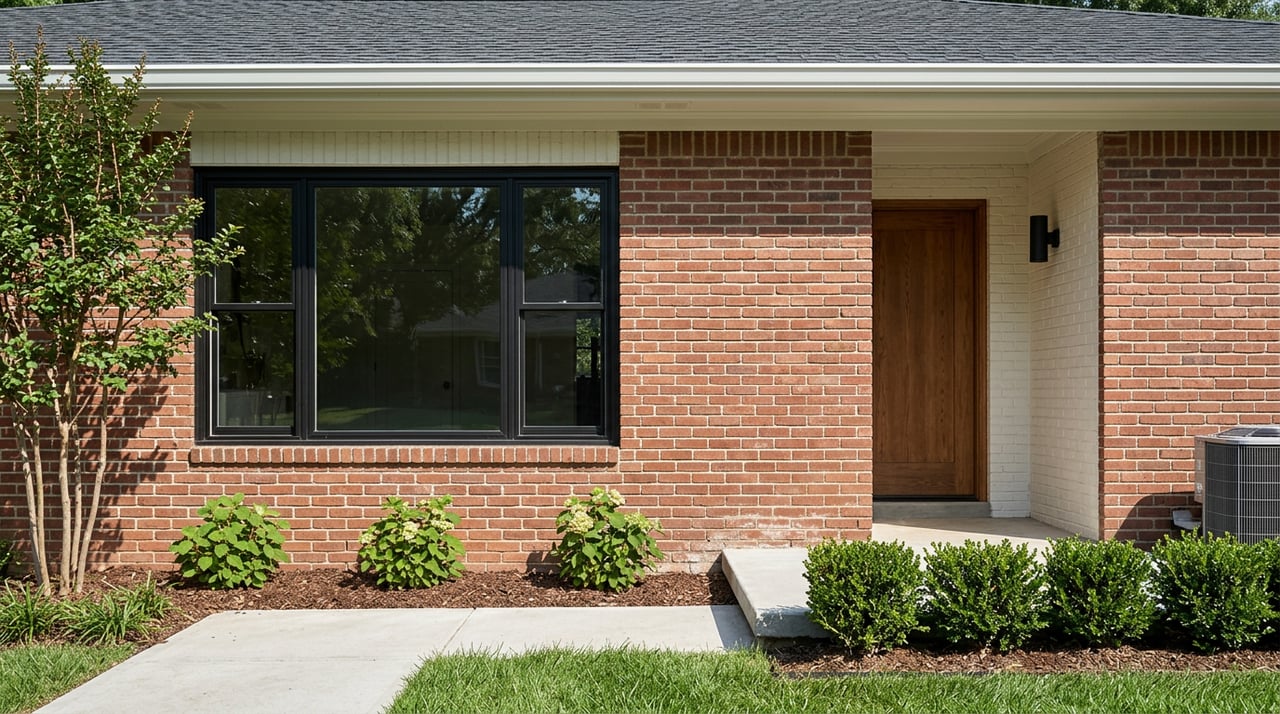
Most local brick ranches were built between the 1950s and 1970s. National housing research confirms the post‑war ranch was the dominant American house type in that era, which lines up with what you’ll see across Marietta’s established neighborhoods. Expect one-level layouts, 3 to 4 bedrooms, 1,000 to 2,400 square feet, and many original or older systems that now need updating. This national overview of mid-century housing provides helpful historical context.
Foundation types you’ll encounter
You will commonly see slab-on-grade or crawlspace foundations. Many mid-century ranches sit on crawlspaces or piers, which can invite moisture problems in Georgia’s humid climate. If you’re new to these structures, review this guide to common foundation types and plan a detailed crawlspace inspection on every deal.
Risks to budget: common issues and repair ranges
Older systems are not a reason to avoid ranches, but they are a reason to budget carefully. Use the ranges below to ballpark costs, then get firm local bids before you finalize your offer.
Roof replacement
Many ranch roofs are at or near the end of their life. A full asphalt-shingle replacement for a single-family ranch often falls between $7,000 and $16,000 depending on size and complexity. In Marietta, a practical planning range is about $8,000 to $14,000. See typical shingle cost factors in this roof cost guide.
HVAC system
If the condenser and air handler are 12 to 20 years old, replacement is likely. Budget about $4,000 to $10,000 for a standard system depending on tonnage, efficiency, and ductwork. For a sense of component costs and drivers, review this HVAC cost reference.
Electrical service and panel
Upgrading to modern 200-amp service with a new panel typically runs $1,000 to $4,000. Aluminum branch wiring or panel relocation can increase scope. For details on what affects price, see this overview of panel upgrade costs.
Windows
Many older ranches still have single-pane wood windows. Replacing with standard vinyl units often falls in the few-hundred-dollars-per-window range installed. Set a placeholder budget by counting windows and multiplying by a mid-range per-unit allowance, then confirm with a local installer.
Plumbing and sewer
Cast iron, root intrusion, or shallow lines under driveways can become expensive. Sewer main repairs can run from a few thousand dollars up to the mid-teens depending on length and site work. Always order a sewer scope if big trees or backups are present. For a broad picture of underground line costs, see this plumbing cost reference.
Foundation and crawlspace
Moisture and wood rot are common in older crawlspaces. Simple encapsulation or drainage fixes may run a few thousand dollars, while significant structural pier work can cost much more. Verify foundation type, check for settlement, and price repairs with a specialist before you commit.
Termites and wood-destroying organisms
Georgia has active termite pressure. Initial treatment and localized wood repair can range from a few hundred dollars to a few thousand dollars depending on scope. Learn more about local treatment approaches from Georgia Pest Authority.
Lead-safe remodeling
Homes built before 1978 may include lead-based paint. If you plan to renovate, follow EPA Renovation, Repair and Painting (RRP) rules for lead-safe work practices. Review the basics in the EPA’s Title X overview.
Cosmetic and value-add upgrades
- Interior paint: about $2,000 to $6,000 depending on size and scope.
- Flooring (LVP mid-tier): roughly $3,000 to $12,000 depending on square footage.
- Kitchens: $10,000 to $35,000 for a refresh to a full gut.
- Bathrooms: $5,000 to $20,000 depending on fixtures and tile choices.
These are planning ranges only. Always price the job in Marietta with two or three contractor bids.
Returns: what ARVs and rents look like in Marietta
After-repair values vary widely by location, lot, and finish. Renovated brick ranches in historic or central pockets can sell high, while similar homes in other submarkets sell in lower bands. Treat ARV as hyper-local. Use three to five renovated comps within one mile and six months, and keep your adjustments tight.
On the income side, use these citywide rent ranges as a starting point:
- 2 bedroom: about $1,400 to $1,900 per month.
- 3 bedroom: about $1,700 to $2,400 per month.
- 4 bedroom: about $2,100 to $3,000+ per month in higher-demand pockets and larger renovated homes.
Confirm your rent with current neighborhood listings and recent leases within the same school cluster and amenity set. Keep your underwriting conservative until you have proof.
Underwriting steps that work in Cobb County
You do not need complex spreadsheets to screen a deal fast. Use these investor-tested rules, then refine with property-level data.
Step 1: Quick prescreen
- Year built 1950 to 1979 means older systems. Increase your repair allowance accordingly. A national housing overview of this era backs up the typical material profiles you will see in Marietta’s ranches. Read the mid-century context.
- Location check within 1 to 2 miles of Marietta Square or other strong amenity corridors can support higher ARVs and rents. Verify with local renovated comps.
- For rentals, apply the 1 percent and 50 percent rules as a first-pass filter. The 1 percent rule asks if monthly rent is close to 1 percent of the price, and the 50 percent rule assumes operating expenses near 50 percent of gross. Learn more about these rules in this BiggerPockets explainer.
Step 2: Flip math with the 70 percent rule
Maximum Allowable Offer (MAO) = ARV × 0.70 − Rehab. It is a conservative screen that creates room for holding and selling costs and profit. In competitive markets, some investors tighten the multiplier, but start here to protect your downside. See a clear definition of the rule in this 70 percent rule guide.
Step 3: Buy-and-hold quick pro forma
- Set rent using at least three active neighborhood listings and three recent rentals.
- Use 5 to 8 percent vacancy for screening, then refine with local property management data.
- Apply the 50 percent rule for expenses or build a line-item budget. Property taxes, insurance, management, utilities, maintenance, and a capital reserve should all be represented. Reference the BiggerPockets guidance to pressure-test your assumptions.
- Cap rate = NOI divided by purchase price. Use it to compare against your target returns and other SFR opportunities.
Field due diligence checklist for Marietta ranches
- Confirm foundation type and look for settlement or moisture in the crawlspace. A quick primer on types is here: foundation types guide.
- Check roof age and condition; if it is older than 15 years, price a replacement using two roofer bids and this roof cost reference.
- Verify HVAC age and performance; budget for replacement if past typical service life. See HVAC component cost drivers.
- Order a sewer scope if there are large trees, past backups, or cast iron present. Use this underground line cost overview to frame the budget.
- Get a wood-destroying organism report and factor treatment or repairs. Learn more from Georgia Pest Authority.
- For pre-1978 homes, follow EPA lead-safe remodeling practices.
- Inspect the electrical panel for age and capacity; price a panel or service upgrade with this panel upgrade cost overview.
- Confirm permits for any additions or major structural changes, and check for any historic-district guidelines that could limit exterior work.
Red flags that often kill deals
- Active foundation settlement or significant pier movement indicated by uneven floors, wide cracks, or moisture damage in the crawlspace.
- Major sewer main failure or repeated backups that require excavation under driveways or large trees, which increases restoration costs.
- Termite structural damage without documentation of prior treatment or warranties. Review treatment options with a local pro such as Georgia Pest Authority.
- Historic-district restrictions that block your planned exterior scope, slowing permits and limiting your ARV.
- Unpermitted structural work that complicates insurance, resale, or financing.
Sample quick math in today’s market
Consider a buy-and-hold screen on a $450,000 brick ranch with realistic rent of $2,200 per month. At a 6 percent vacancy rate, effective monthly income is about $2,068. Using the 50 percent rule, operating expenses would be around $1,034 per month, leaving about $1,034 per month for debt service and cash flow, or roughly $12,408 in annual NOI. That gives you a cap rate near 2.76 percent, which suggests you need a better price, higher rent, or a different property to meet most investor yield targets.
Now look at a flip screen. If your ARV from nearby renovated ranch comps is $550,000 and your realistic rehab is $60,000, the 70 percent rule gives a MAO near $325,000. If the asking price sits well above that number, you likely do not have a safe margin unless you can raise ARV or lower rehab. You can review the rule mechanics here: 70 percent rule.
How to create your edge in Marietta
Winning brick-ranch deals in Cobb County comes down to three habits:
- Buy only when your ARV is supported by three to five recent renovated comps within one mile.
- Price the big five systems early: roof, HVAC, electrical, plumbing/sewer, and foundation. Use the cost ranges in this article to set a starting budget, then bring in two bids for each.
- Stay conservative on income assumptions. Start with citywide rent bands, then tighten using current neighborhood listings and leased comps.
When you combine tight comps, real bids, and simple rules, you lower risk and make faster, better decisions.
Ready for hands-on help?
If you want a second set of eyes on a specific Marietta ranch, you can lean on a technical, inspection-grade approach to valuation and repair scoping. From quick ARV modeling to contractor-ready repair lists and buy-and-hold pro formas, you can get practical guidance built for investors. To start a focused conversation about your goals and target addresses, reach out to Evan Beckett.
FAQs
What are typical rents for a 3-bedroom brick ranch in Marietta?
- Many 3-bedroom ranches lease around $1,700 to $2,400 per month citywide, with higher rents in central pockets near amenities; confirm with current neighborhood listings and recent leases.
How do I use the 70 percent rule on a Marietta flip?
- Multiply your ARV by 0.70, then subtract your rehab budget to get a maximum allowable offer; see a plain-language overview in this guide.
What big-ticket repairs should I budget first on mid-century ranches?
- Focus on roof, HVAC, electrical panel/service, plumbing and sewer, and foundation or crawlspace moisture; price these with two bids each before finalizing your offer.
Do I need a sewer scope on older brick ranches?
- Yes, especially if you see large trees, cast iron piping, or a history of backups; costs for underground line work can run several thousand dollars, so scoping protects your budget (see this cost overview).
How do historic-district rules near Marietta Square affect renovations?
- Exterior changes can be limited and permit timelines can be longer, which may raise holding costs; verify guidelines with the city early if your value-add plan relies on exterior updates.